A musician's own "Buy Now" button that became the largest seller of independent music online and sold for US$22 million
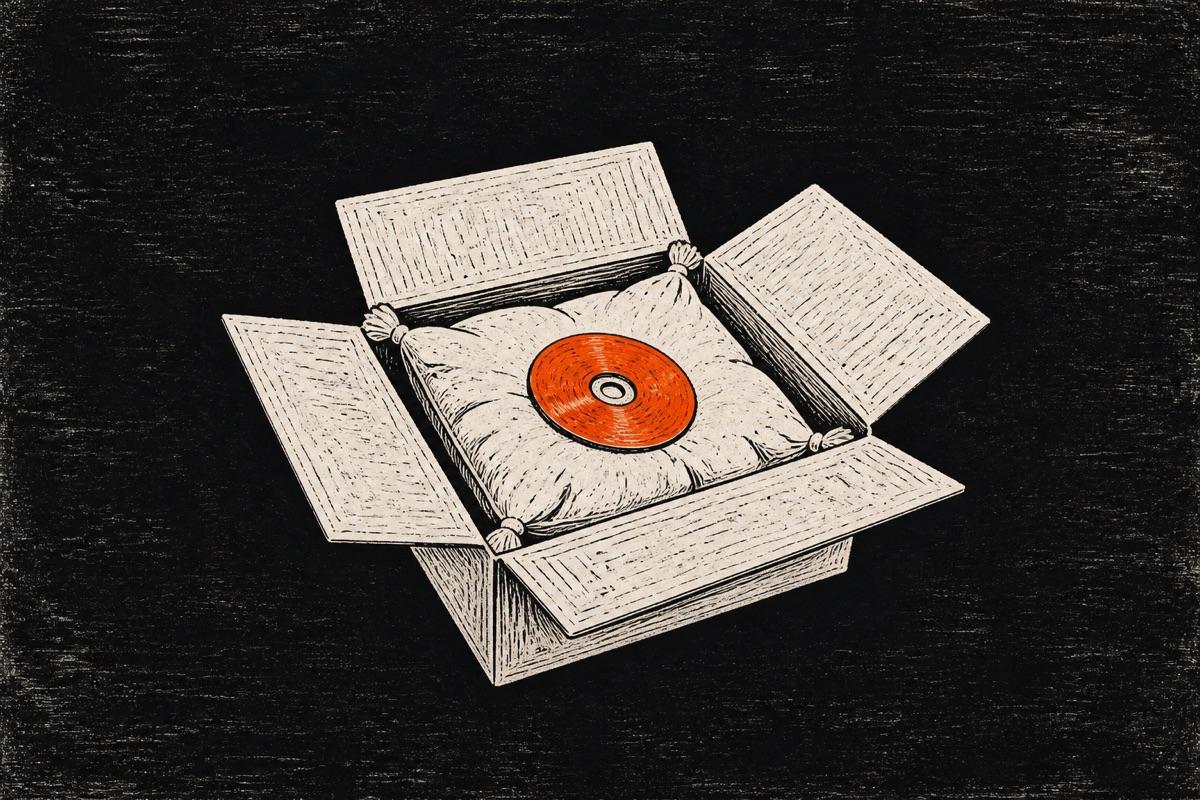
Written by MRRMaker from Derek's posts on sive.rs, the transcripts of seven interviews from 1998 to 2016, Disc Makers' announcement of the purchase and CD Baby's own pages, read in full. Every fact links to its source. Not reviewed by Derek.
At a glance
| What it is | An online store that sold independent musicians' CDs, and later delivered their music to digital stores such as Apple iTunes 1 |
| Started | March 1998 14, from a shopping cart Derek built for the website of Derek's own band in 1997 2 |
| Funding | None. Derek owned 100% of the company and never had investors 2 25 |
| Revenue | About US$25 million in sales, in Derek's words (November 2005) 2. At the time of the sale, about US$20 million of sales a year and a net profit of about US$4 million a year, as Derek said in December 2009 3 |
| How it charges | US$35 to set up an album and US$4 kept on each CD sold, unchanged for ten years 4. A 9% cut on digital sales (2005) 2 |
| Customers | About US$100 million in sales for 150,000 musicians by the 2008 sale, in Derek's words (December 2009) 3 |
| Team | About 85 employees (January 2008) 5 |
| Outcome | Sold with HostBaby to Disc Makers in 2008 for US$22 million 18, which went to a charitable trust for music education 6 |
Before CD Baby: a musician with one CD to sell
Derek decided at 14 to be a successful musician. 7 Derek studied at Berklee College of Music, worked at Warner/Chappell Music after graduating in 1990, and quit that job in 1992. 7 For ten years Derek was also the ringleader and musician of a circus, playing about 1,000 shows. 7
In 1996 Derek recorded and released an album. 7 Derek sold about 1,500 copies at live shows. A radio campaign then put it at number one on college stations in New Mexico, Maine and Alaska, and Derek wanted people there to be able to buy it online. 3
Nobody would sell it online. There was no PayPal, Amazon only sold books, and the big online record stores only took artists who came through the major labels' distribution. 3 When Derek asked, the stores laughed and said: "Look, kid. It doesn't work that way." 3
So Derek built a store into the band's own website. Getting a credit card merchant account took three months of red tape and US$1,000 in setup fees, and an inspector was sent out to check the business. 3 Derek copied the shopping cart from Perl script examples in books. 3
A favour for friends that became a store
Fellow musicians in New York asked if Derek could sell their CDs through that button too. 4 It spread by word of mouth to friends of friends, until Derek moved twelve other bands off the band's site and onto a separate store: CD Baby. 2 At first it was a hobby for weekends, next to touring, producing records and running a recording studio. 2
Derek put in US$500 and never added more: US$99 for Dreamweaver, US$20 for a first month of web hosting and US$375 for an SSL certificate. 3 Derek remembers the first month bringing in US$300, at a loss, and the second US$700, a profit. 3 In a 2015 interview Derek gave the startup cost as US$495 and the second month as more than US$400 of CD sales. 4 Growth was slow: maybe US$1,000 in the eleventh month, but profitable. 3
Once Derek saw a business forming, Derek wrote down what a distributor would look like from a musician's side: 2
- Pay the musician every week, no matter what.
- Give the musician the full name and address of every buyer.
- Never drop anyone for not selling enough.
- Never sell placement or advertising.
Two prices, set in five minutes
For the first ten or fifteen friends, Derek charged nothing. 4 When strangers began sending CDs, Derek asked the small record store in Woodstock, New York, how it took CDs on consignment. It kept a flat US$4 per CD and paid every week, so CD Baby did the same. 4
Adding an album took Derek about 45 minutes of scanning, cropping and fixing spelling, worth about US$25 in Derek's mind. Derek then made it US$35, to leave room for a discount whenever someone asked. 4 Those two numbers stayed CD Baby's whole business model for the next ten years. 4
In a cable TV interview in 1998, Derek said CD Baby had 2,500 artists and accepted everyone. 9 Each page was still made by hand, in about 30 minutes, with no advertising anywhere on the site. 9 Derek did not screen for taste: the CDs Derek loved did not sell, and some that did not catch Derek's attention became top sellers. 9
Other small services came from the same habit. Derek already had a UPC barcode account, which cost about US$400, and began assigning barcodes to musicians for US$20 each. Derek's rough figure for what that brought in over the years was about US$2 million; the source does not say more about its scope. 4 Derek calls this the "co-op business model": share something you already have, and charge a little to cover the time. 4
HostBaby started in 1999. 7 Musicians kept complaining to Derek about their web hosts. Derek hosted a few friends for free, then started a hosting company at a low monthly price and hired one person to help. 10
No competitors, and no investors
For the first year or two, Derek had no competition: a musician who wanted to sell online had to come to CD Baby. 4 Derek later put much of the success down to luck, starting at the end of 1997, when there were no other online music stores. 11
During the dot-com boom, investors kept calling. Derek asked why they wanted to invest. They said "so you can grow it faster", and Derek answered, "but I don't want to grow it faster." 4 MP3.com asked Derek to name a price. Derek turned it down, and said no again when they asked "even billions of dollars?" 4 After a year or two, Derek told customer service to turn such callers away. 4
Derek also said no to ideas. Every day someone suggested a record label, a radio station, a magazine or a tour. The answer stayed the same: "No, we're a record store." 2
The first employee came about a year in. 2 CD Baby started in Woodstock, New York 2 and by 2008 was a Portland, Oregon-based company. 1
An order email people forwarded
The order confirmation email was plain at first. A few months in, Derek spent 20 minutes rewriting it. 4 In the new version, 50 employees polished the CD, a packing specialist placed it in a gold-lined box, and the whole town waved it goodbye. 4 Customers replied to an automated email, forwarded it to friends and posted it on their blogs. In Derek's words, thousands of people heard about CD Baby that way. 4
Letting go of the daily work
Four years in, CD Baby had 20 employees and almost every question still went through Derek. 4 Derek booked a flight to leave and not give the staff a phone number. Then, after watching the film Vanilla Sky, Derek cancelled it and chose to fix the problem instead. 4
From then on, every question became a short lesson to the whole team: what to do, and why. On refunds, for example, the answer was always to give the money back. Several people wrote each answer down. 4 It took six months. After that, employees did the hiring and trained the new people. 4 Derek stepped back from the office at the end of 2002. 5 Derek spent the days programming CD Baby's future, from 7 in the morning to midnight. 4
iTunes, and US$200,000 given back
Apple invited CD Baby to its office, and Steve Jobs pitched it himself: put every song ever recorded on the iTunes store. 2 Derek announced a digital distribution service with a US$40 fee, and 5,000 musicians paid it: US$200,000. 2
Apple's "few weeks" became four to five months of waiting, and musicians started to suspect a scam. 2 CD Baby had already spent US$50,000 on legal fees and almost US$100,000 on hardware. Derek gave everyone's money back anyway. 2 The next week, Apple said it was ready. 2
Since most of the cost was fixed, Derek made the service free to join and kept a 9% cut of digital income. 2 By November 2005 about 50,000 artists used it. Napster told Derek the CD Baby catalogue was larger than the major labels' catalogues combined. 2
In November 2005 Derek described CD Baby as the largest seller of independent CDs on the web: over 100,000 artists, about US$25 million in sales and 50 employees. 2 Income was roughly half from selling music on the site and half from fees paid by musicians. 2
The last two years
In 2007 Derek rewrote the whole website software from scratch. 8 The plan for 2008 held about 20 projects, each taking 2 to 12 weeks, and none excited Derek. 8 One example: buyers wanted single songs, but the code treated the album as the smallest unit, so allowing it meant rewriting almost all of it. 5
The culture inside the company had also gone wrong. 3 Derek describes about eight good years, then a split with the staff. In the same month that employees voted CD Baby the best place to work in Portland, they signed a manifesto asking Derek to get out of the way. 3 By mid-2007 Derek had stopped speaking to employees. One night Derek shut the site down for about 15 minutes to close the company, then started it again. 3 Derek takes full responsibility, and calls it over-delegating: "I wasn't even checking in." 5
In the autumn of 2007 Derek seriously planned to give CD Baby away by hiding five golden tickets in CDs. Musicians would then vote for the new owner among the finders. Friends talked Derek out of it. 5
The decision, and two bids
In one week of January 2008, three companies called to ask about buying CD Baby. Derek said no, as usual. 8 That weekend, Derek wrote in a diary about "What if I sold?", and for the first time the answer was yes. 8 Seth Godin's advice was "If you care, sell." 8 Derek went to bed on 18 January 2008 having decided. 8
Derek let two companies bid and chose the lower one. 8 Amazon was in the running and, in Derek's words, willing to offer much more. Derek said there was no final offer from Amazon, and put the gap at "many millions". 3 Derek chose Disc Makers, a partner for seven years that already served independent musicians. 3 Derek named a price, US$22 million, and Disc Makers agreed without negotiating. 5 Derek put the price at about six or seven times net profit. 3 US$22 million is 5.5 times a profit of about US$4 million (our arithmetic: 22 ÷ 4).
Two conditions mattered to Derek. Derek kept a copy of the customer database as of the sale. Derek also signed only a narrow non-compete: no new music store or web host, but freedom to keep helping the same musicians. 3
The paperwork took seven months, partly because the buyer was borrowing from a bank. 5 Derek handed the details to the lawyer with four terms that mattered, so the company would be in good hands and Derek would have nothing to do the day after. 5 In March 2008, on CD Baby's tenth birthday, Derek announced that Derek no longer worked there. CD Baby had paid more than US$70 million to musicians by then. 12 The deal closed on 1 August 2008. 5
On 5 August Disc Makers announced the purchase. 16 It described CD Baby as working with more than 240,000 artists, with more than 100,000 visitors a day and more than 2 million digital tracks. 1 CD Baby had paid musicians more than US$81 million in ten years. 20 It would keep running as a separate company, with Derek as a consultant. 1
The money went to music education
A few months before the sale, Derek moved CD Baby and HostBaby, including trademarks and software, into a charitable trust: the Independent Musicians Charitable Remainder Unitrust. 6 When Derek dies, all of its assets go to music education. 6 Disc Makers bought the company from the trust, not from Derek. 6 Derek writes that this saved about US$5 million in taxes, which means US$5 million more for music education. 6 The trust has no board. Derek named a few music-education charities in the trust document. 6
After the sale
Under Derek's 2009 post about the decision, many musicians wrote that they missed the old CD Baby. They complained about the redesign, slower service and lower sales. 8 In 2011 Derek published a first book, "Anything You Want", 40 short lessons from starting, building and selling CD Baby. 13 A few years after the book came out, a former customer-service employee who now had staff of their own wrote to Derek to apologise for how the team had treated Derek. 11
Where it stands (October 2026)
CD Baby still calls itself music distribution for independent artists, on more than 150 streaming and download services. 53 It charges once per release: US$9.99 for a single and US$14.99 for an album, with no subscription fees. 14 It keeps 9% of digital distribution revenue and still pays weekly. 14 The home page text we read says CD Baby has paid more than US$1 billion to independent artists since 1998. 15
Decisions you can copy
- Charge what the shop down the street charges. CD Baby's US$35 and US$4 came from asking a local record store, and lasted ten years. 4
- Leave room for a discount. US$35 instead of US$25 let staff give a discount whenever someone asked. 4
- Write the customer's ideal deal first. Weekly pay, buyer names, no removal for low sales and no paid placement shaped the whole company. 2
- Give the money back before trust breaks. Derek refunded US$200,000 when Apple ran months late. 2
- Teach the why, not only the what. Answering each question to the whole team took six months, and freed Derek from the daily work. 4
- Delegate, but keep checking in. Derek's own reading of the culture's collapse is over-delegation. 5
- Pick the buyer, not only the price. Derek chose Disc Makers over a bigger Amazon offer. 3
- Decide where the money goes before the sale. The trust sold the company, and Derek writes that this saved about US$5 million in taxes. 6
What the record does not say
- What were CD Baby's revenue and profit year by year between 1998 and 2008? Derek gave only a few points in interviews.
- Derek said 2,500 artists in a 1998 TV interview 9 but later remembered about 50 artists when the first employee joined in 1999 2. Which is right?
- Derek counted about 150,000 musicians at the sale 5 and Disc Makers more than 240,000 artists 1. Did they count different things?
- How much did Amazon offer, and how far apart were the two bids?
- Who owns CD Baby today? The pages read do not say.
- How much has the trust grown since 2008?
Sources
- Disc Makers, "Disc Makers Acquires Leading Online Independent CD and Download Seller CD Baby", press release, 5 Aug 2008 ↗
- Greg Galant, "Venture Voice by Greg Galant", interview transcript on sive.rs, 1 Nov 2005 ↗
- Adrian Bye, "Meet Innovators by Adrian Bye", interview transcript on sive.rs, 1 Dec 2009 ↗
- Tim Ferriss, "Tim Ferriss Show : part 1 by Tim Ferriss", interview transcript on sive.rs, 1 Dec 2015 ↗
- Greg Galant, "Venture Voice by Greg Galant", interview transcript on sive.rs, 1 Oct 2008 ↗
- Derek Sivers, "Why I gave my company to charity", sive.rs, 4 Dec 2009 ↗
- Derek Sivers, "about Derek Sivers", sive.rs, last updated 13 May 2026 ↗
- Derek Sivers, "How I knew I was done with my company", sive.rs, 13 Oct 2009 ↗
- Paul Berkin, "Poughkeepsie Live by Paul Berkin", interview transcript on sive.rs, 1998 ↗
- Moe Abdou, "33 Voices by Moe Abdou", interview transcript on sive.rs, 1 Sep 2015 ↗
- James Altucher, "James Altucher", interview transcript on sive.rs, 1 Mar 2016 ↗
- Derek Sivers, "Happy 10th Birthday to CD Baby — and an announcement", sive.rs, 24 Mar 2008 ↗
- Derek Sivers, "Anything You Want (my first book)", sive.rs, 29 Jun 2011 ↗
- CD Baby, "How Much Does CD Baby Cost? Transparent Pricing Guide", read 26 Oct 2026 ↗
- CD Baby, "Music Distribution for Independent Artists | CD Baby", home page, as stored ↗
Keep reading
Back to Derek’s profile → DEREK SIVERS · PROFILESold CD Baby for $22 million (2008), then wrote five books
 Andras BacsaiCOOLIFYAn open-source Heroku alternative with no investors, from about US$200 a month in donations (2023) to US$23,000 a month in recurring revenue for its maker, coolLabs (2026)
 Marc KöhlbruggeBETALISTA weekend hack to get press for another app, then almost US$1 million in revenue over its first ten years